The Resurgence of Dimensional Dot Patterns: Why 3D Ball Halftones Are Redefining Visual Design
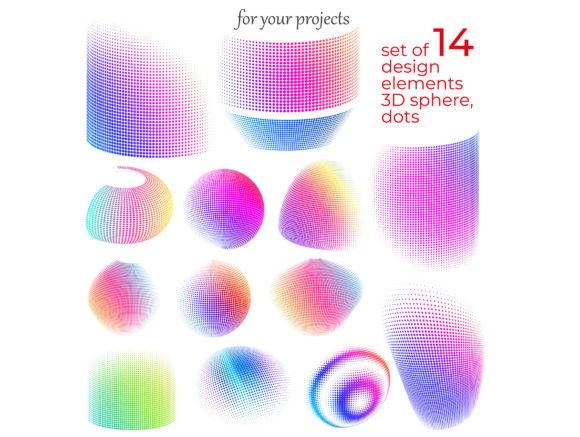
In a digital landscape saturated with flat vectors and minimalist gradients, designers are increasingly turning to tactile, dimensional elements to break through the noise. Among the most compelling of these emerging visual tools is the 3D Balls Halftone of Dots — a sphere constructed entirely from meticulously arranged dots that creates an optical depth both retro and futuristic. These elements are not merely decorative flourishes; they represent a fundamental shift in how we conceptualize texture, depth, and materiality in two-dimensional spaces.
For professionals, creators, entrepreneurs, and marketers alike, understanding how to leverage these halftone spheres effectively can elevate ordinary projects into visually arresting experiences. The beauty of a 3D Balls Halftone of Dots Sphere lies in its paradox: it is simultaneously mathematical and organic, structured yet fluid, nostalgic yet forward-looking. This article explores the practical applications, conceptual underpinnings, and strategic value of incorporating these design elements into your creative toolkit.
The Anatomy of a Halftone Sphere: More Than Meets the Eye
Before diving into applications, it is worth understanding what makes a 3D Balls Halftone of Dots Sphere visually distinctive. Traditional halftone patterns rely on varying dot sizes and spacing to simulate tonal gradients. When applied to a spherical form, the dots behave according to the curvature of the surface — clustering densely in shadowed areas and dispersing toward highlights. This creates an almost sculptural illusion, where a flat screen or printed page appears to host a tangible, floating orb.
The term "3D Balls" specifically refers to the spherical geometry, while "Halftone of Dots" describes the rendering technique. Together, they produce a design element that feels weighted, physical, and responsive to imagined light sources. For designers working across branding, packaging, or digital interfaces, this quality introduces a layer of perceptual depth that flat icons and gradients simply cannot achieve. It invites the eye to linger, to explore the interplay of positive and negative space, and to appreciate the craftsmanship embedded in the pattern.
These elements often arrive packaged conveniently — you receive zip files containing EPS formats, making them scalable and editable across Adobe Illustrator, Photoshop, and other industry-standard software. This flexibility ensures that whether you are crafting a logo, designing a website hero section, or producing large-format prints, the integrity of the dot structure remains pristine.
Why Contextual Relevance Outweighs Trend-Chasing
It is tempting to treat a beautiful design element like a halftone sphere as a one-size-fits-all solution. The more sophisticated approach, however, involves evaluating contextual fit. A 3D dot sphere carries connotations of precision, technology, playfulness, and sometimes even mid-century print aesthetics. Placed within a tech startup's brand identity, it might suggest algorithmic sophistication or data visualization. Used in a greeting card or holiday promotion, it evokes a sense of celebration — confetti frozen mid-burst, or a snow globe rendered in graphic form.
Entrepreneurs and marketers should ask: What story does this element tell in this specific context? A halftone sphere used in an educational presentation might visually represent atomic structure, planetary bodies, or cellular biology. In interior design, a large-scale print of dot-based spheres can transform a wall into a conversation piece that bridges pop art and geometric abstraction. The key insight is that the element's meaning shifts depending on its surroundings — color palette, scale, placement, and accompanying typography all influence perception.
Rather than chasing trends, professionals who integrate these elements thoughtfully find that their projects communicate intentionality. The modern and stylish quality of the design emerges not from the element itself, but from the designer's ability to align it with the project's core message.
Graphic Design and Brand Identity
For graphic designers, the 3D Balls Halftone of Dots Sphere offers a versatile building block for logomarks, icon systems, and brand patterns. A logo incorporating a dot-based sphere can suggest global reach, technological interconnectedness, or holistic thinking — all without resorting to overused globe metaphors. When applied as a background texture on business cards, letterheads, or social media templates, the halftone pattern adds tactile richness without overwhelming the primary content.
The EPS format ensures that these elements can be recolored, resized, and combined with other vector shapes seamlessly. A designer might extract the dot pattern from the sphere and apply it to other forms, creating a cohesive visual language across an entire brand identity. This adaptability transforms a single design asset into a system of related motifs.
Web and Mobile App Interfaces
In UI and UX design, subtle dimensionality can guide user attention and improve perceived usability. A halftone sphere used as a hero illustration can anchor a landing page with visual weight, while smaller dot-based elements might serve as loading animations, achievement badges, or navigational accents. The dot pattern naturally draws the eye — a phenomenon rooted in how human vision processes high-contrast, high-frequency details.
For mobile apps, these elements can embellish onboarding screens, reward dialogs, or profile avatars. Because the design is vector-based, it scales gracefully across device resolutions. The beautiful design element contributes to a polished, premium feel that can influence user retention and brand perception. Users may not consciously register the dot sphere, but its presence elevates the overall aesthetic coherence.
Packaging and Print Design
Physical packaging benefits enormously from halftone textures. A cosmetics box adorned with pearl-like dot spheres communicates luxury and attention to detail. A craft beer label featuring bold, colorful halftone orbs suggests creativity and artisanal quality. In scrapbooking and card making, these elements add a contemporary edge to handmade projects — die-cut spheres, layered dot patterns, or embossed textures that echo the digital aesthetic in tactile form.
Print designers should consider how halftone patterns interact with physical substrates. On uncoated paper, the dots absorb ink differently than on glossy stock, creating subtle variations that enhance the handcrafted feel. On metallic or translucent materials, the sphere design takes on new dimensions as light plays across the surface.
Interior Design and Environmental Graphics
Interior designers and visual merchandisers are increasingly incorporating graphic elements into spatial design. A 3D Balls Halftone of Dots Sphere translated into wall murals, window films, or acoustic panels introduces rhythm and movement into environments. In retail spaces, these patterns can define zones, guide customer flow, or reinforce brand identity through environmental storytelling.
For residential interiors, framed prints or canvas pieces featuring dot-based spheres offer a contemporary alternative to traditional abstract art. The mathematical precision appeals to minimalist sensibilities, while the playful dot arrangement softens the overall effect. The result is decor that feels intentional, modern, and conversation-worthy.
Infographics, Animation, and Educational Content
Data visualization often suffers from visual monotony. Infographics that integrate halftone spheres as data points, diagram nodes, or section dividers benefit from the added visual interest without sacrificing clarity. The dot structure naturally suggests granularity, precision, and analysis — qualities that align well with data-driven storytelling.
In animation and motion graphics, dot spheres can pulse, rotate, or assemble dynamically, creating engaging transitions and micro-interactions. For educational materials and presentations, these elements can illustrate concepts ranging from molecular structures to demographic distributions. The versatility of the sphere as a universal shape makes it a reliable motif across diverse subject matter.
Technical Considerations and File Management
When you receive zip files containing EPS assets, organization becomes essential. Create a dedicated asset library structured by category, color treatment, and intended application. Because EPS files are resolution-independent, they can be exported to PNG, SVG, or other formats as needed. Designers should take advantage of the ability to isolate individual dots or clusters within the sphere, enabling custom variations that distinguish their work from others using the same base assets.
Color adjustment is another critical consideration. A halftone sphere rendered in monochrome communicates something entirely different from the same sphere in a vibrant gradient. Warm tones suggest energy and approachability; cool tones imply calmness and technical precision. Experimenting with opacity, blending modes, and overlay effects can produce results that feel entirely original, even when starting from a common design element.
Adding Style and Originality Without Compromising Cohesion
The ultimate goal of incorporating a 3D Balls Halftone of Dots Sphere into your projects is not simply decoration — it is differentiation. In competitive markets, visual memorability translates to brand recall. A distinctive design element used consistently across touchpoints becomes a signature, a visual shorthand that audiences associate with your brand or creative identity.
However, originality arises from combination and context, not from the element alone. Pair a halftone sphere with unexpected typography, juxtapose it against photographic textures, or use it in a niche application where competitors default to conventional imagery. These thoughtful choices compound, turning a beautiful design element into a strategic asset.
For freelancers and creators, these elements reduce production time while expanding creative possibilities. Rather than constructing complex dot patterns from scratch, you can focus on the higher-order decisions — composition, narrative, emotional tone — that distinguish exceptional work from merely competent output. The time saved on asset creation converts directly into capacity for refinement and iteration.
The Enduring Appeal of Dot-Based Aesthetics
Dot patterns have persisted across design eras for a reason. From pointillism to Ben-Day dots, from halftone printing to pixel art, the dot represents a fundamental unit of visual construction. A 3D Balls Halftone of Dots Sphere modernizes this lineage by adding the illusion of volume, creating a bridge between analog printing heritage and digital precision.
As design trends continue to oscillate between minimalism and maximalism, elements that occupy the middle ground — structured yet expressive, simple yet detailed — will remain relevant. The halftone sphere exemplifies this balance. It is complex enough to reward sustained attention, yet clean enough to integrate into professional contexts without visual clutter.
Whether you are designing for holidays, branding campaigns, editorial layouts, or interactive media, these elements offer a reliable foundation for creative exploration. They adapt to the tone you set, the colors you choose, and the story you tell. In a creative landscape that increasingly values both efficiency and originality, having versatile, high-quality design assets at your disposal is not a luxury — it is a competitive necessity.
The next time you open a zip file of EPS halftone spheres, consider the full spectrum of possibilities they represent. Each dot within the sphere is a pixel of potential, waiting to be arranged into something unmistakably yours.