What Makes the Comprehensive Strategy Plan PowerPoint Template a Practical Choice for Business Presenters
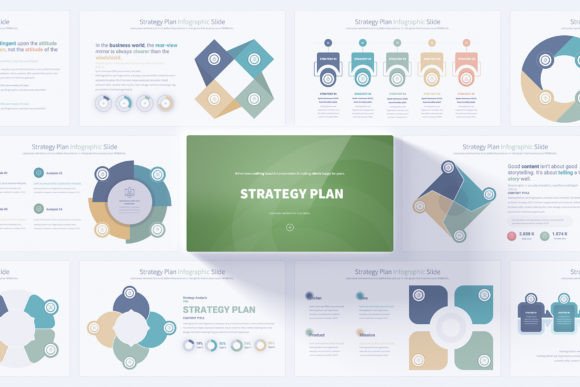
When developing a corporate strategy, a vision roadmap, or a go-to-market plan, the presentation deck often becomes the single source of truth for stakeholders. The Comprehensive Strategy Plan PowerPoint Template is designed to meet that need through a large collection of professionally designed slides. With 17 unique layouts replicated across 12 color varieties, the full download gives you 204 slides. This volume alone puts it in a different category from many one-off strategy decks, but quantity is only part of the picture. Understanding how it compares with alternatives—and where it fits in your workflow—helps you decide if it matches your expectations.
The Anatomy of a 17-Slide Strategy Framework
At its core, the template offers a series of pre-built “blueprint” slides that cover common strategy storytelling elements: vision & mission statements, SWOT analysis, competitive positioning, growth matrices, financial snapshots, milestone timelines, and more. Because each of the 17 designs is a separate conceptual layout, you aren’t just getting multiple versions of the same slide with different fillers; you’re getting distinct infographic structures. This matters most when you need to present complex data in a digestible way without hiring a designer for every iteration.
Many strategy presentation templates on the market bundle 30–50 unique slides but often sacrifice depth in any single visual category. Here, the 17-deck approach might initially seem modest, yet the multiplication across 12 color schemes yields a “choose your own palette” library of 204 slides. It’s a unique scaling model that prioritizes visual consistency over endless one-off layout variety. For teams juggling multiple branding requirements or consultants serving different clients, this color-flexibility is a practical advantage you won’t always find in leaner, single-theme packs.
How 12 Color Variations Shape Your Workflow
Color isn’t just decoration in strategy slides; it reinforces hierarchy, highlights key metrics, and aligns with corporate identity. Having 12 pre-defined color variations on a light background means you can quickly adopt a palette close to your brand without manually re-coloring every shape. Compared to templates offering only dark/light theme switches or a single accent color, this breadth cuts down on “color hunting” time. However, it’s worth noting that all variations are built on a light background—ideal for projectors and screens in well-lit rooms, but less suited for dark-mode desktop dashboards or ambient presentations where reverse text might be preferred.
While most alternative strategy decks offer 3–5 color schemes at best, this template’s 12 options sit in a middle ground between fully custom design and rigid template. You still retain the ability to override the theme colors via the Slide Master if none of the 12 fit exactly, and the bonus 280 editable vector icons adopt the same color sets, preserving consistency. The tradeoff is that scrolling through 204 slides to pick the right variant might feel overwhelming initially. Using the Slide Master to lock in your brand colors on the parent slides can mitigate that, essentially turning the bulk into a curated set.
Comparing Infographic-Heavy vs. Minimalist Strategy Decks
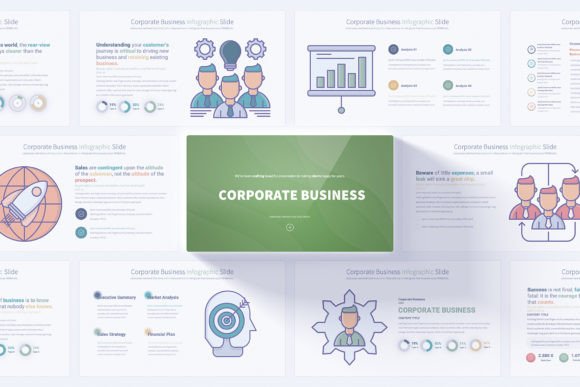
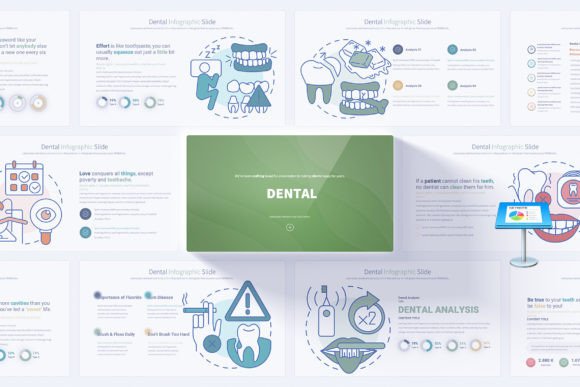
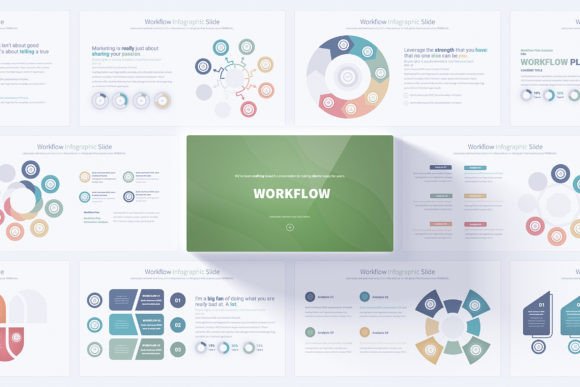
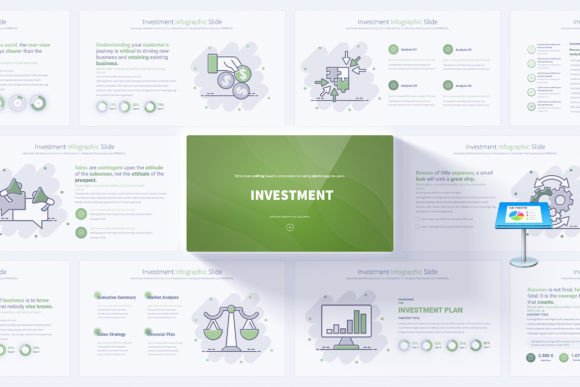
Strategy presentations tend to polarize between data-dense infographic styles and clean, minimalist text-driven layouts. This template leans strongly toward the infographic side. Slides feature handmade infographic elements, connected charts, icon-based lists, and multi-segment diagrams. It’s a good match when you want to visualize growth loops, funnel analytics, or resource allocation without building charts from scratch.
If your presentation relies heavily on narrative paragraphs, long-form written arguments, or white space to emphasize key phrases, a minimalist deck might serve you better. Such templates often use fewer numbers, larger fonts, and airy layouts. They shine in keynote-style talks or high-level vision pitches where one idea occupies an entire slide. The tradeoff is that they rarely include the variety of infographic shapes found here. For board reports, investor updates, or detailed strategic plans—situations where numbers and relationships must co-exist with text—the infographic density of the Comprehensive Strategy Plan template tends to be more communicative.
Still, because the template is fully editable, you can always delete unnecessary elements and simplify slides to match a quieter tone. But starting from a detailed infographic and subtracting is often harder than starting minimal and adding. Thus, your evaluation should consider whether your typical audience expects data-rich slides or sparse conceptual ones.
Built-in Animation and Transition Benefits Versus Static Slide Decks
Animated slides and smooth transitions come baked into this template, designed to guide attention without becoming distracting. In a world where many premium strategy templates are still static—relying on you to add fades and morphs—this is a notable efficiency. Animated elements can make a progression reveal in a timeline or a KPI dash more dynamic, which is particularly useful during virtual presentations where viewer attention drifts easily.
However, animation is a double-edged sword. If you frequently export slides to PDF handouts or print them, animation is irrelevant and can even cause conversion glitches if not managed. Some corporate environments also restrict animation in official decks for compliance and accessibility reasons. Compared to static alternatives, this template gives you the head start of ready-made motion, but you’ll want to verify whether your internal style guide allows it before committing.
The Slide Master Advantage: Customization Without Losing Cohesion
One of the more subtle but impactful features is the template’s thorough use of Slide Master. For those unfamiliar, Slide Master allows you to change fonts, colors, and positioning across all slides in one place. This means that even with 204 slides and 17 distinct layouts, you can implement a corporate font switch or logo placement once and see it ripple through every slide. Compared to templates that rely on copy-pasted elements across slides with no master layout connection, this architecture significantly lowers the frustration of global updates.
The bonus of 280 fully editable vector icons further ties into this eco-system. Because vector icons are tied to theme colors, redesigning a slide’s color story from warm to cool automatically updates every icon in that set. In many alternative products, you’d need to manually replace or recolor each icon, which multiplies editing time. The vector format also ensures crisp scaling on any screen size—an asset for the 16:9 Full HD resolution these slides are built for.
Use Cases Where This Template Excels
- Multi-client consultants: The 12 color variations let you quickly align a baseline strategy deck with different brand guidelines without rebuilding each time.
- Internal annual planning: Teams can repurpose the same layouts for quarterly reviews, merely adjusting colors for each business unit while keeping the structure consistent.
- Pitch decks that require data storytelling: The infographic elements reduce the need to switch between Excel charts and PowerPoint shapes, keeping the narrative flow intact.
- Rapid prototyping of strategic ideas: Because the slides are pre-populated with purposeful shapes, you can drop in your own data and move straight to messaging, rather than starting with a blank canvas.
Conversely, there are scenarios where the template might introduce more complexity than needed. A single-use, company-wide town hall with a very specific CEO-driven aesthetic may benefit more from a bespoke design. A highly regulated industry with strict iconography and disclosure formatting may find the built-in infographic style too casual without heavy adaptation. Similarly, if your team works exclusively in Google Slides or Keynote and rarely touches PowerPoint, the .pptx format will require conversion, which can shift alignment and fonts. While the template is built for PowerPoint, many people successfully import .pptx into other tools with minor adjustments, but it’s not a guarantee of pixel-perfect translation.
How It Stacks Up Against Single-Purchase and Subscription Template Libraries
The presentation assets market can be divided roughly into three tiers: free basic templates, one-time purchase premium packs like the Comprehensive Strategy Plan template, and subscription services that grant ongoing access to thousands of slides. Free templates often lack infographic depth and have limited color options; they serve well for a student project or internal quick notes but rarely sustain a professional strategy narrative. Subscription platforms offer variety but can be overwhelming and commit you to monthly fees even when you only need one strong deck.
This template sits in the middle. For a single purchase, you get a concentrated set of strategy-focused designs with deep color customization and ease of editing via Slide Master. The 204-slide count might look smaller than the “unlimited” libraries of subscription services, but those libraries often mix general business slides with educational, wedding, and creative templates—requiring you to sift through irrelevant designs. Here, every slide is purpose-built for strategy communication, which can reduce decision fatigue.
On the other hand, if you frequently need vastly different styles (say, a minimalist report one week and a bold marketing launch deck the next), a subscription service with broader styles might provide more breadth. The Comprehensive Strategy Plan template is a specialist, not a generalist, which is both its strength and its boundary.
Making the Most of the Bonus Documentation and Support Materials
The inclusion of PDF documentation may seem minor, but it matters when multiple people on a team need to understand the template’s logic. Instructions often clarify how to use custom icons, how to shift color palettes efficiently, and how to repurpose slides without breaking master-linked elements. In comparison, many template downloads leave you to figure out the architecture on your own, occasionally leading to inconsistent modifications across team members.
If you’re evaluating options, consider templates that come with some form of guidance as a differentiator. It speaks to whether the creator invested in long-term usability rather than just a set of pretty pictures. The PDF manual also tends to shorten onboarding for new hires who might inherit the deck, an underrated advantage when presentations are living documents updated over months.
Balancing the Pros and Cons Before You Decide
No template is a perfect fit for everyone. The strengths of the Comprehensive Strategy Plan PowerPoint template revolve around its visual cohesion, extensive color control, integrated infographic narrative, and time-saving Slide Master structure. Its limitations are mainly situational: the light-background constraint, the PowerPoint-exclusive format, and an infographic density that may require thinning out for highly text-centric or ultra-minimalist brands. By weighing these factors against how your organization typically builds and shares strategy documents, you’ll arrive at a clearer picture of whether this resource belongs in your toolkit.
Ultimately, the choice comes down to the kind of strategy communication you lead. If your role demands frequent, polished, data-infused presentations that must adapt to different audiences or brand expressions without starting from scratch each time, the combination of 17 core layouts, 12 color sets, and editable vector icons offers a strong foundation. But if your strategy is communicated more through conversations, whiteboarding, or lean executive summaries, you might only need a fraction of what this template provides—and a smaller, simpler set could be the more efficient path.